CEO update: Patients with chronic pain deserve nothing less

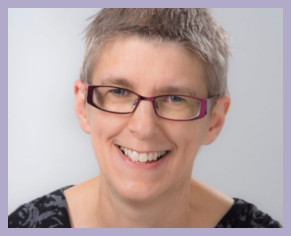
by Sue Brown, CEO ARMA

I write this reflecting on my day yesterday, which was unexpectedly dominated by discussions on pain. Pain is, of course, something we all talk about a fair bit in the MSK health world, as it’s one of the shared factors that cuts across all MSK conditions. I’m increasingly realising it is something we don’t always deal with particularly well.

My day yesterday began with reading New Scientist on the train, including an article about UK doctors’ concerns that we will follow the US into an opioid crisis.…

Read more of this article

Axial SpA Referral Template launch

NASS was delighted to launch the NASS Allies referral template, in conjunction with the Institute of Osteopathy and Royal College of Chiropractors, at the Primary Care and Public Health Conference on 15 and 16 May. The template was developed to help chiropractors and osteopaths in recommending referral for patients with suspected inflammatory back pain to rheumatology.

The template has been endorsed by the Royal College of GPs and Chartered Society for Physiotherapy. NASS is grateful to both the Institute of Osteopathy and Royal College of Chiropractors for their continued collaboration and wonderfully patient-centred approach.…

Read more of this article

A spending review for wellbeing? An idea whose time has come

Guest blog by Dr Jeanelle de Gruchy, President of the Association of Directors of Public Health

To its great credit, New Zealand has become the first country in the world to produce a “wellbeing budget” – a commitment to prioritise population wellbeing as the main mission of the government. A similar philosophy was adopted in Wales in 2015, with the Well-being of Future Generations Act requiring public bodies to think about the long-term impact of their policies on both people and places.…

Read more of this article

Adapted Homes, Empowered Lives report

On 8 May, Versus Arthritis published a new policy report looking at the impact of home aids and adaptations for people with arthritis, and the barriers that people face when trying to access them. Read the full report here, which includes powerful stories from people with arthritis who benefit from aids and adaptations.

We found that aids and adaptations – from perching stools and grabbing tools, to grab rails and stair lifts – can help people with arthritis, and related conditions such as back pain, achieve a better quality of life and maintain their independence in the home.…

Read more of this article

Fit For the Future: a Vision for General Practice

The Royal College of GPs (RCGP) has published a vision for general practice for 2030. It sees a very different place for general practice from the current model, with increased multidisciplinary working and a greater focus on prevention and well-being. This was developed with the involvement of patients, GPs and other stakeholders.

This is a response to the changing nature of health needs with more people presenting with complex and multiple conditions. The current primary care workforce is stretched and the numbers of GPs per 1,000 of population have declined by 5% in the last ten years.…

Read more of this article

Aspiring to Excellence programme now open for applications

Following a successful launch event at the British Society for Rheumatology Conference on 1 May, applications are now open for the Aspiring to Excellence award programme. The programme is designed to encourage and recognise service improvement in axial SpA (AS) care and is a strategic partnership between NASS, BRITSpA and sponsoring companies AbbVie, Novartis and UCB.

The deadline to apply is 31 July and all the application details can be found on the NASS website. For further information please contact annamcgilvray@nass.co.uk

Read more of this article

Construction Roundtable report – Action is needed

Action is needed to tackle £646 million burden of bone, joint and muscle problems, a new ARMA report says.

construction-work-related-pieIndustry leaders called for action to tackle the huge burden of bone, joint and muscle conditions on people in the construction industry, in a report released today (30/05/2019). Physically demanding work means the construction industry has one of the highest rates of musculoskeletal disorders costing £646 million every year – accounting for over three-quarters of all occupational ill-health costs.

The report from the Arthritis and Musculoskeletal Alliance (ARMA) followed a roundtable meeting of industry leaders.…

Read more of this article

RSA Sustainable Health Event

Integrating Health Systems and Paradigms to Drive Culture Change

Tuesday 25 June 2019 at 18:00 – 20:00

Join the RSA Health, Care and Wellbeing Network for a conversation about the integration of health systems and paradigms to support sustainable health, hosted by Paul Hitchcock FRSA.

This event will be an opportunity to explore how the two approaches might be mutually supportive in driving the sort of culture change that we need.

This is a participative event: after an introduction from Paul there will be time to discuss the issues raised, and time for informal networking as well.…

Read more of this article

Call for mental health to be prioritised for musculoskeletal patients

In April 2019, ARMA, supported by UK charity Arthritis Action, released a new report looking at the impact of mental health on people with arthritis and other musculoskeletal (MSK) conditions. The report followed a roundtable event, organised by ARMA in March, which, for the first time, brought together leaders from Mind, NHS England, Arthritis Action, and other health charities to look at ways to improve access to effective psychological support for MSK patients. 

roundtable-document

Sue Brown, CEO of ARMA, says:

“It’s not surprising that mental health is so common amongst people with conditions which cause long term pain.

Read more of this article

MACP to call a membership vote

The Musculoskeletal Association of Chartered Physiotherapists (MACP) is shortly to call a vote of its current members to widen its membership categories in order to broaden access and strengthen the voice of musculoskeletal physiotherapy. The vote for change in membership signifies a potentially large change for the organisation and so it has consulted its membership over the past six months to determine if this is the direction the organisation wants to explore.

It recognises that training to become an MACP is one form of specialist post registration in the UK and so by broadening access through different categories it will lead to wider workforce of physiotherapists providing excellent care for people musculoskeletal conditions.…

Read more of this article