
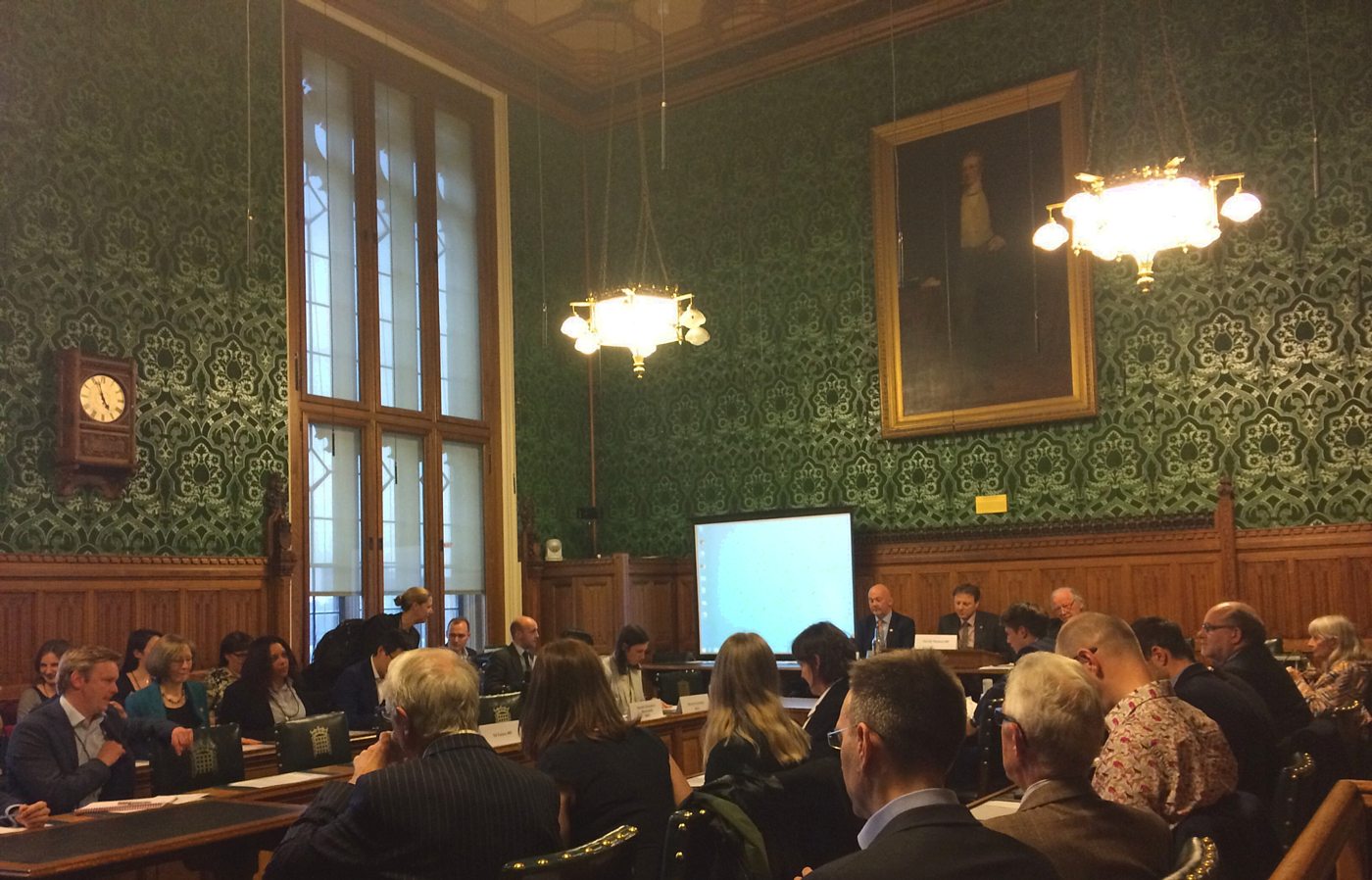
 Last week saw a momentous event for people living with axial SpA (AS) in the UK, when NASS held the inaugural meeting of the first ever all-party parliamentary group (APPG) specifically for Axial Spondyloarthritis. Parliamentarians, policy makers, clinicians, healthcare commissioners and NASS members and staff came together to identify and address concerns about AS care.
You can read NASS CEO Dr Dale Webb’s reflections on the meeting and more of what’s to come from NASS’ Every Patient, Every Time campaign.


 Thursday, 14 March 2019, in London
 The course is worth 12 CPD points if completed alongside the e-learning course.
 In 2018 NASS held two community engagement conferences called NASS Voices, in Scotland and Northern Ireland, aiming to bring together people with axial SpA (AS), their families and friends, local rheumatologists, nurses, physiotherapists and others interested in the condition. The team wanted people to come with questions and leave with answers.
 FFN UK hip fracture review meeting at Wolfson College, Oxford on 8 May 2019.

 In early February, ARMA was one of 55 signatories to an open letter published in The Times newspaper from the Association of Directors of Public Health. The letter argued that public health should be a priority in the Spending Review.
 Versus Arthritis is excited to report that over 1,000 people have answered the survey on aids and adaptations.
 Prevention seems to have been the theme of my February. The possibility that a lot of the pain and disability of MSK conditions might be prevented, and that this is being taken seriously is an exciting prospect. Even where the conditions can’t be prevented, good self-management support can make a big difference to the impact of the condition. The Government is clear that the future sustainability of the NHS depends on prevention, and that it wants to improve healthy life expectancy by at least five extra years, by 2035.…
 We all know that MSK is one of the two biggest causes of sickness absence in the UK. It’s perhaps no surprise that this is even more true in the construction sector. Every year, occupational ill‐health costs construction employers £848million in reduced productivity, sick pay, cover for absence and replacing staff who leave because of ill health.