

Resources to help with your Network
 Developing MSK Networks Toolkit
This resource pack provides healthcare professionals as well as commissioners and providers of MSK services with a framework for planning and developing a local MSK network, and signposts to a wide range of additional materials which may be useful as they undertake this task.
It has been co-produced with the MSK community, and distils some of the findings of the project to date, providing a practical resource to support CCGs seeking to improve outcomes for all forms of MSK disorders through a “networks” approach and with patients at the heart.
A retrospective
This document takes the reader through the policy developments of MSK First Contact Practitioners in primary care. It will determine the timeline for the policies, the influences they had on each other and some of the strategic uni- and multi-professional work that contributed to its current position. It also provides a history of the research, evaluation, education and competency of FCP. The final section outlines future developments including workforce, education, supervision and governance.
 Fracture Liaison Services
Fracture Liaison Services (FLS) help identify people with fragility fractures and reduce the risk of further breaks. The Royal Osteoporosis Society’s FLS Implementation Toolkit supports commissioners, service managers and healthcare professionals to assess local need and develop high-quality services. It includes tools to model local fracture impact, build an evidence-based business case and plan effective FLS delivery.
Here you will find links to the standards and to an implementation toolkit.
 British Orthopaedic Association Commissioning Guides
The British Orthopaedic Association has published four revised commissioning guides with the Royal College of Surgeons of England (RCS). These guides set out best practice care pathways to assist Clinical Commissioning Groups (CCGs) in designing optimal care for their populations. The guides are:
- Pain Arising from the Hip in Adults
- Painful Deformed Great Toe in Adults
- Painful Osteoarthritis of the Knee
- Treatment of Carpal Tunnel Syndrome
 Falls Prevention Economic Model
The falls prevention economic model shows in detail how much money could be saved and falls prevented if everyone 65+ identified as at risk of falling was referred to physiotherapy.
It brings together data comes from high-quality sources including the Cochrane Collaboration and the Office for National Statistics. Planners and commissioners using the model can be confident that the conclusions are likely to be nationally representative, but every local area is different so the model is designed for you to input your own data to take account of existing local pathways.
The latest version of the model shows a return on investment of over £4 when £1 is invested in physiotherapy for falls prevention.
Professional contacts in your area
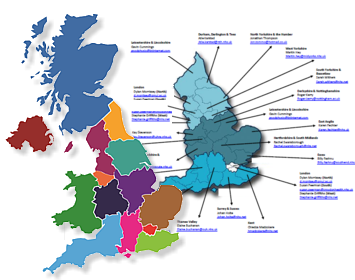
Find out who are some of the key people to speak to about involving professional groups in your local networks.
The Chartered Society of Physiotherapy‘s map of regional representatives is available here as a PDF to download (240KB).
 BOA’s Regional Representatives:
See below for contact email addresses for the British Orthopaedic Association’s regional commissioning networks (consisting of Regional Advisers, working on a regional level, and Clinical Champions representing the BOA at individual trusts):
EastEngland
London
NorthWest
SouthEast
SouthEngland
SouthEngland

“Networks are the future”
Prof. Peter Kay
National Clinical Director for MSK, NHS England