

 Alongside the pain and misery of the Covid-19 pandemic there have also been some beneficial side effects – quiet streets and skies, birdsong, less pollution. This is also true in the world of MSK. ARMA has been a champion for the NHS Change Challenge, a project to identify the new and innovative ways of working that have been rapidly developed across the NHS and to ensure beneficial changes are captured and locked in. I think it is no accident that NHS Improvement chose to pilot this in MSK.…
Read more of this article
MSK & Arthritis News
SOMM’s scheduled courses

 SOMM’s next Foundation course is due to be held in London in September, and all courses following are still scheduled to take place at the moment. The Society is keeping a close eye on advice as the lockdown eases.
MSc Musculoskeletal Medicine
The good news is that the next run of the MSc Musculoskeletal Medicine has been confirmed as definitely going ahead as planned this year. Induction will take place during the week beginning 7 September 2020 but will now be conducted remotely.…
Read more of this article
The changing landscape of orthopaedic services in light of the COVID-19 pandemic


 Guest blog by
Cormac Kelly, Consultant Upper Limb Surgeon at The Robert Jones and Agnes Hunt Orthopaedic Hospital NHS Foundation Trust
and
Peter Kay, National Orthopaedic Alliance (NOA) Lead Clinician and Consultant Orthopaedic Surgeon at Wrightington, Wigan and Leigh Teaching Hospitals NHS Foundation Trust
The COVID-19 crisis has changed the delivery of planned orthopaedic surgery drastically. As the pandemic continues to subside, the NHS, with various guidance from Public Health England, Medical and Surgical Colleges, the British Orthopaedic Association, and others, is working on a plan to get surgery back on track.…
Read more of this article
Moving Medicine wins Patient Care Award
 Moving Medicine, an innovative online tool designed for healthcare professionals to promote and support their patients to get more active, has been awarded the patient-centred care award at the Royal College of Physicians’ Excellence in Patient Care Awards 2020.
The Moving Medicine tool has specific modules for key common conditions: cancer, depression, MSK pain, COPD.
Never before has physical activity had such an essential role to play in the treatment and prevention of disease as the nation recovers from COVID19.…
Read more of this article
Upcoming NASS self-management sessions
The next NASS Facebook Live sessions:
- Thursday 23 February 2023, 18.00: High-Intensity Interval Training session with Josh Poole, Senior Physiotherapist; and
- Wednesday, 1 March, 13.00: Talking to friends and family about your axial SpA with Zoë Clark, NASS Senior Self-management Programme Officer.
To watch live, visit the NASS Facebook page at the time of the live session. (If you can’t see the video, refresh your page.)
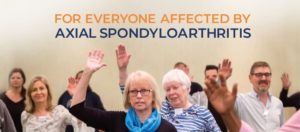 The NASS Facebook Live sessions have been running for about three years now, helping people to manage their axial SpA (AS) in unprecedented times and beyond.…
Read more of this article
Reumavid study
 Reumavid is a questionnaire investigating the consequences of the covid-19 pandemic on people living with rheumatic conditions in United Kingdom.
The survey is aimed at people living with rheumatic diseases who are experiencing confinement due to COVID-19.
Its aim is to describe the consequences of the pandemic on the evolution of the disease, support services, healthcare, the quality of life and the emotional well-being of people living with rheumatic diseases.
This study is promoted by National Axial Spondyloarthritis Society (NASS), National Rheumatoid Arthritis Society (NRAS), and Arthritis Action, and conducted by the Health & Territory Research (HTR) of the University of Seville, with the support of Novartis Pharma AG.…
Read more of this article
New covid-19 well-being information
 New information on preventing musculoskeletal #bone, joint and muscle pain, and supporting mental well-being, has been compiled by NHS England, The Chartered Society of Physiotherapy, Versus Arthritis, Public Health England and ARMA.
See the Managing your physical and mental health and wellbeing page on the CSP website.
NHS Change Challenge
 Suggestions are rolling in for which changes the NHS has made during the pandemic that people think we should keep.
You can see the other suggestions and add or vote by visiting the NHS Change Challenge website.
Global rheumatology patient survey – Covid 19
 Pain UK would like to alert you to the work of the Covid-19 Global Rheumatology Alliance, an organisation established to “collect, analyze and disseminate information about COVID-19 and rheumatology to patients, physicians and other relevant groups to improve the care of patients with rheumatic disease.”

Rheumatology patients are invited to complete a patient survey, whether or not they have been diagnosed with COVID-19. A worldwide consortium of doctors, scientists and patient groups are seeking your views on the current situation. Tell them how it is for you via this link.
Arthritis Action Webinar “COVID-19 and Arthritis: Live Q&A”
 Arthritis Action invites you to a webinar dedicated to addressing coronavirus concerns for people with arthritis.
“COVID-19 and Arthritis: Live Q&A” will take place on Thursday 18 June 2020, 11am – 12pm.
The webinar will be presented by Arthritis Action CEO, Shantel Irwin, who will be asking their Medical Advisor, Dr Wendy Holden, Consultant Rheumatologist at North Hampshire Hospitals, patients’ most frequently asked questions about COVID-19 and Arthritis.
Anyone interested can register here. Attendees are invited to submit questions relating to this topic on or before Friday 5 June 2020, by emailing onlinesme@arthritisaction.org.uk…
Read more of this article